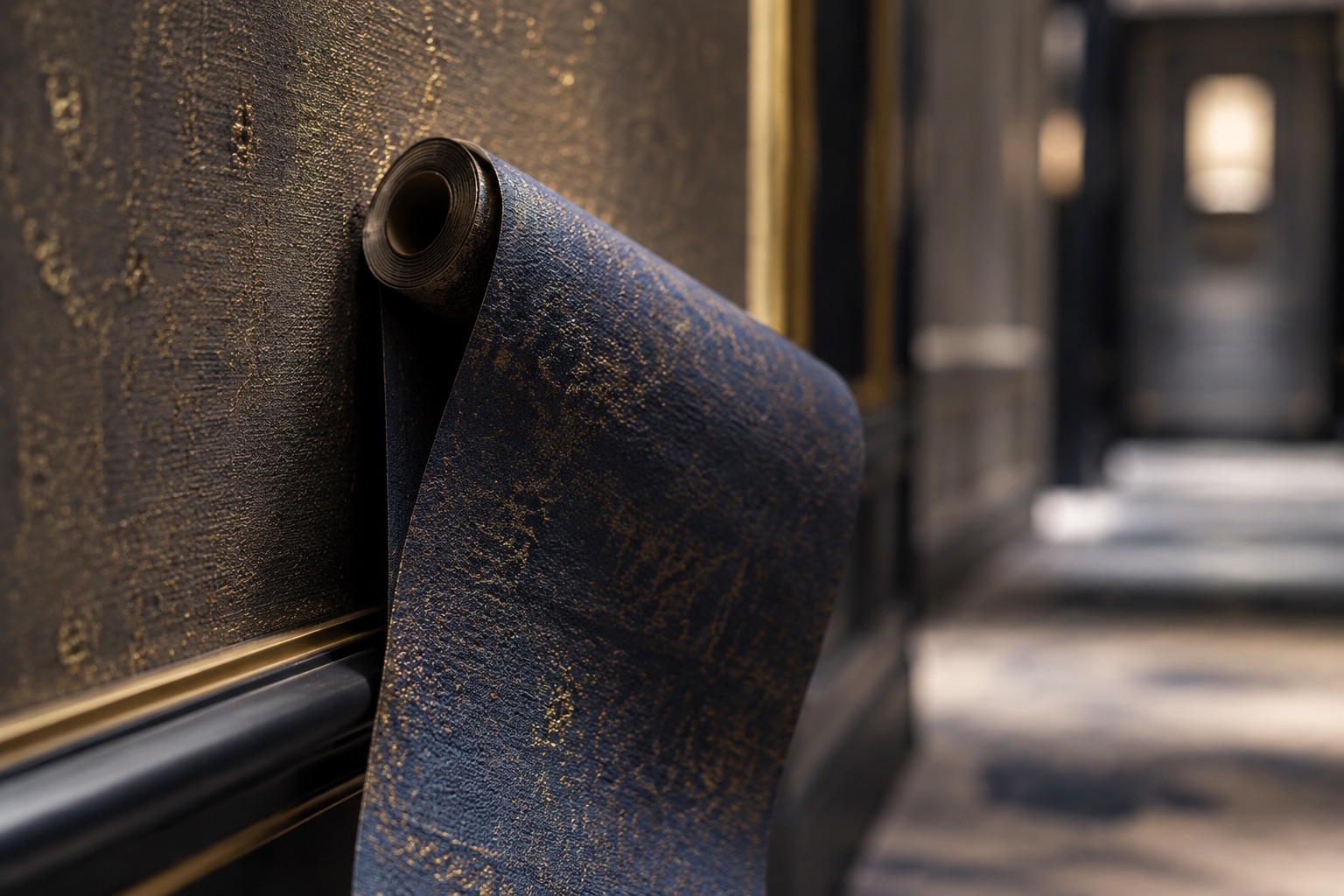
Spec-grade wallcovering, hung by a crew
that has turned over 800+ guestrooms.
Type I, II, and III commercial wallcovering for hotels, resorts, restaurants, country and yacht clubs, healthcare, senior living, and luxury condos across Southwest Florida. We read the spec, the ASTM F793 durability class, the ASTM E84 Class A fire rating, the occupied-property phasing, and we hold it. Backed by a Florida CBC general contractor (CBC 1258403) and a documented $25M+ hospitality renovation portfolio.
The material is half the job. The other half is keeping the property open.
Commercial wallcovering turns on two things the residential trade rarely touches: the spec sheet and the operating schedule. A hospitality designer does not pick a pattern. They call out a durability class (Type I, II, or III under ASTM F793 and CCC-W-408) and a Class A flame-spread rating under ASTM E84, because the property has to pass inspection and survive housekeeping carts, luggage, and ten years of corridor traffic. Then you have to hang it without closing the hotel. That means working a floor at a time, holding loud prep to permitted hours, protecting occupied corridors, and turning rooms back to housekeeping on a daily rhythm. We have run that playbook across more than $25M in hospitality renovation. Westmont Hospitality alone exceeded $11M over seven years and 800+ guestrooms, and wallcovering was part of nearly every one of those scopes. The crew that wraps your lobby feature wall is the same operation that has kept open hotels open through full brand-standard renovations.
Commercial & hospitality wallcovering services
Commercial wallcovering installation (Type I / II / III)
Silk & textile wallcovering
Murals, scenics & hand-painted wallcovering
What owners and design teams get that a paperhanger can't offer.
One licensed partner can prep, build, and hang the wall
We hold a Florida CBC general contractor's license (CBC 1258403). The same accountable company can demo, repair substrate, skim and prime, install lining, and hang the finish material. No paperhanger pointing at a drywall contractor when a seam telegraphs a bad wall.
A documented $25M+ hospitality portfolio
Westmont Hospitality referenced $11M+ over seven years and 800+ guestrooms. The Key West Hotel Collection covered 525 guestrooms across four properties. Brand-standard renovations for Marriott, Hilton, IHG, Wyndham, and Best Western — wallcovering was in nearly all of them.
We install to the spec, not to a guess
Type I, II, or III under ASTM F793 and CCC-W-408. Class A flame spread under ASTM E84. Mildew-resistant adhesives and breathable substrates where humidity demands them. We confirm the submittal against the actual material and document what went on the wall.
Occupancy-aware scheduling that keeps you open
Phased floor-by-floor or wing-by-wing installs, off-hours work in occupied corridors and lobbies, daily turnover to housekeeping, and coordination with the GM and corporate timeline. We have run this on live properties, not just on paper.
A 42-year master standard on every wall
Steve Cusimano began his craft at 21, hanging wallcovering in a prince's palace in Saudi Arabia. Forty-two years later the same standard goes on every wall we touch: booked seams, true repeats, clean double-cuts, whether it's a 300-room corridor or a single ballroom mural.
From submittal to final walk, no surprises on the wall.
- 01
Spec review & submittal
Read the finish schedule. Confirm the F793 durability class, the E84 fire rating, the pattern repeat and match, and railroading direction. Flag anything with a procurement lead time that threatens the schedule.
- 02
Substrate prep & lining
Assess and repair the wall, because the finish only looks as good as what's under it. Skim, prime with the right sealer for the material, and install lining paper where a delicate or high-sheen good needs a flawless plane.
- 03
Occupancy & phasing plan
Sequence the install around guests and operations. Publish the floor-by-floor or area-by-area plan, set off-hours windows for occupied spaces, and lock the daily turnover rhythm with housekeeping and engineering.
- 04
Installation
Book the material, hang to the repeat, and double-cut seams so they disappear. Numbered-panel sequencing for murals and scenics. Protect adjacent finishes and turn each completed area back to operations clean.
- 05
Punch, documentation & attic stock
Walk every wall under raking light. Close punch. Hand over product documentation, care guidance, and labeled attic stock so a future repair matches the original dye lot.
Commercial & hospitality wallcovering questions.
What is the difference between Type I, Type II, and Type III wallcovering?
The Type number is a commercial durability class defined by ASTM F793 and the federal CCC-W-408 standard, based on backing weight and abrasion resistance. Type I is light-duty for low-traffic areas, Type II is the medium-duty workhorse most hotel corridors and guestrooms specify, and Type III is heavy-duty for high-abuse zones. We install to whatever class your finish schedule calls out and confirm the material's rating against the submittal before it goes up.
Do you install Class A fire-rated wallcovering for hotels and commercial buildings?
Yes. Most commercial and hospitality projects require a Class A flame-spread rating under ASTM E84, and corridors and exit paths almost always do. We verify the material's tested rating, install with code-compliant adhesives, and keep the documentation so the property passes inspection. If a specified material can't meet the required rating, we flag it during submittal review rather than at punch.
Can you install wallcovering while the hotel stays open?
Yes. Occupied installs are most of what we do. We phase the work floor by floor or wing by wing, run loud prep and lobby work during off-hours, protect active corridors, and turn finished rooms back to housekeeping daily. This is the same occupancy-aware playbook we have run across $25M+ in hospitality renovation, including the Key West Hotel Collection's 525 guestrooms.
Do you handle PIP and brand-standard refresh cycles?
Routinely. We have executed brand-standard renovations for Marriott, Hilton, IHG, Wyndham, and Best Western, and wallcovering refresh is a standard line item in a property improvement plan. We read the PIP finish requirements, coordinate procurement against the construction schedule, and sequence the install so corridors and guestrooms come back online on the brand's timeline.
Why does coastal Florida humidity matter for commercial wallcovering?
High ambient humidity is the leading cause of seam failure, mildew, and adhesion problems in Southwest Florida, especially in oceanfront and poolside corridors. The fix is in the prep: the right primer-sealer for the substrate, mildew-resistant adhesive, breathable substrates where the wall needs to dry, and proper acclimation of the material before it goes up. We build the assembly for the climate, not for a showroom.
Can you also repair the wall before you hang the wallcovering?
Yes, and that is the advantage of working with a licensed general contractor instead of an install-only crew. Under our Florida CBC license (CBC 1258403) we can demo old material, repair or replace damaged substrate, address moisture issues, and build the wall to plane — then prep and hang the finish. One company is accountable for the whole assembly, so there is no finger-pointing when a seam telegraphs a defect underneath.
Have a finish schedule or a PIP refresh to bid?
Send us the spec: Type, fire rating, material lines, and the occupancy situation. We'll come back with substrate questions, a phasing approach, and a realistic schedule before anyone signs.