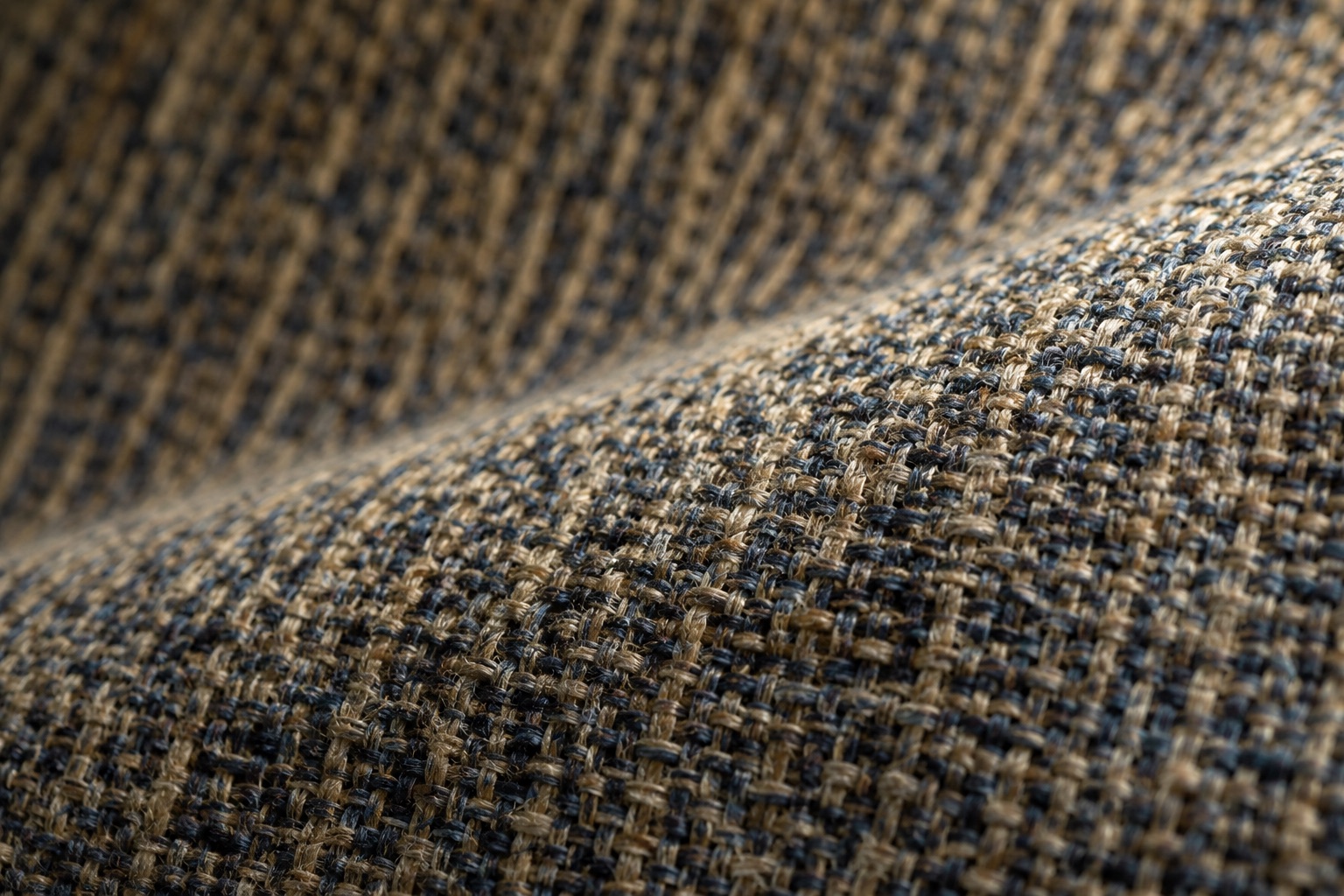
Grasscloth & Natural-Fiber Wallcovering Installation
Grasscloth, sisal, hemp, cork, and mica punish shortcuts. The seams are visible by design, the panels never match the photo, and Florida humidity moves the paper after you leave the room. We hang it the way the mills intend. Phillip Jeffries and the lines like it are part of our daily work.
On grasscloth, every shortcut shows up on the wall
Natural-fiber wallcovering breaks the rules people expect from paper. The seams do not disappear. They are visible by design, so they have to be deliberate, plumb, and evenly spaced rather than hidden. The color is never uniform. Arrowroot, jute, and sisal are dyed in lots, and two panels cut from different bolts can read as two different walls under afternoon light. The paper has no print to hide behind, so any paste that bleeds onto the face, any roller mark, any over-handled edge is permanent. In Southwest Florida the material keeps moving after the installer is gone, because raw fiber expands and contracts with humidity that no thermostat fully controls. A crew that hangs vinyl all week will treat grasscloth like vinyl, and the client will see it for the life of the wall. We treat it as what it is: a hand-laid natural material where sequencing, seam strategy, and substrate prep decide the outcome before the first strip goes up.
Natural-fiber wallcovering, handled end to end
- Grasscloth, arrowroot, sisal, jute, hemp, abaca, cork, and mica/metallic natural-fiber installation
- Dye-lot and bolt inspection on delivery, with panels sequenced in run order so color shift moves gradually, not abruptly, across a wall
- Double-cut (overlap-and-cut) seams for tight, true butt joints that respect the woven texture instead of crushing it
- Full substrate prep: skim, sand, prime, and a non-staining acrylic or clay-based primer/sizing chosen for the specific fiber
- Wall liner / lining paper where the substrate or humidity calls for it, to stabilize the surface beneath the fiber
- Paste-the-wall or paste-the-paper method selected to the material, with no paste on the face and no over-saturation that swells the fiber
- Acclimation: material rested in the installed environment before hanging so it stops moving before it is on the wall, not after
- Layout planning so panel seams fall on logical lines and the railroaded or sequenced run reads intentionally around corners and openings
- Outlet, switch, and trim cut-ins finished clean, plus protection and dust control for occupied luxury interiors
The sequence behind a clean natural-fiber wall
- 01
Inspect, sequence, acclimate
We open every bolt, confirm the dye lots, and number the panels in run order. The material then acclimates in the room so the fiber settles to the local humidity before a single strip is cut.
- 02
Prep and prime the substrate
Walls are skimmed, sanded, and primed with a non-staining sizing matched to the fiber. Where the wall or the climate warrants it, we line first so the natural material sits on a stable, uniform surface.
- 03
Hang in sequence, double-cut the seams
Panels go up in their numbered order, plumbed to a struck line. Seams are double-cut for true butt joints, and the face stays clean — no paste, no burnishing, no over-handling of the woven surface.
- 04
Detail, inspect, protect
Cut-ins at outlets, trim, and corners are finished tight. We inspect every seam in raking light, then protect the finished walls through the rest of the project so the install is not damaged by other trades.
Why designers hand us the delicate material
42 years on the wall, starting with the hard stuff
We know the lines you are specifying
Built for Florida humidity, backed by a GC license
Grasscloth and natural-fiber wallcovering: questions we get
How much does grasscloth installation cost?
Most luxury grasscloth installs are priced per roll or per panel for labor, separate from the material, because the material itself ranges widely: arrowroot in the low hundreds per roll, hand-woven and metallic lines several times that. Labor reflects the substrate prep, whether lining is required, ceiling height, and how much cutting the room demands. We quote after seeing the wall and the spec rather than giving a blind square-foot rate. Natural fiber priced like vinyl is usually priced by someone who hangs it like vinyl.
Why are the seams on grasscloth visible?
Visible seams are inherent to natural fiber, not a defect. Grasscloth, sisal, and jute are woven from real plant material that cannot be color-matched edge to edge the way a printed vinyl can, so the seam is meant to be seen. Our job is to make those seams deliberate, plumb, evenly spaced, and double-cut for tight butt joints, so the eye reads them as part of the texture rather than as a mistake.
Does grasscloth hold up in Florida humidity?
It can, but only if it is installed for the climate. Raw natural fiber expands and contracts with moisture, so in coastal Southwest Florida we acclimate the material in the room first, prime and sometimes line the substrate to stabilize it, and choose a paste method that does not over-saturate the paper. In humid, splash-prone, or poorly ventilated spaces we will tell you honestly when a different material is the smarter specification.
What is a dye lot, and why does it matter for natural-fiber wallcovering?
A dye lot is a single batch of fiber dyed together; the next batch will differ slightly even in the same color name. On natural-fiber wallcovering this matters more than on any printed paper, because there is no print to mask the shift. We confirm the lots on delivery and sequence the panels in run order so any gradual color movement flows across the wall instead of jumping at a seam.
Can you install Phillip Jeffries and other luxury natural-fiber lines?
Yes. Phillip Jeffries is one of the natural-fiber and metallic lines we install regularly, and we know the others designers reach for: arrowroot, sisal, hemp, cork, and mica wallcoverings across the high-end market. Because we already know how these materials behave, we follow the mill's sequencing and paste guidance as a starting point, then adjust for the specific wall and the Florida environment.
Related Services
Specifying grasscloth on a project? Talk to us before it ships.
Send us the line and the room. We will review the substrate, the dye-lot risk, and the humidity exposure, then tell you exactly how we would hang it.