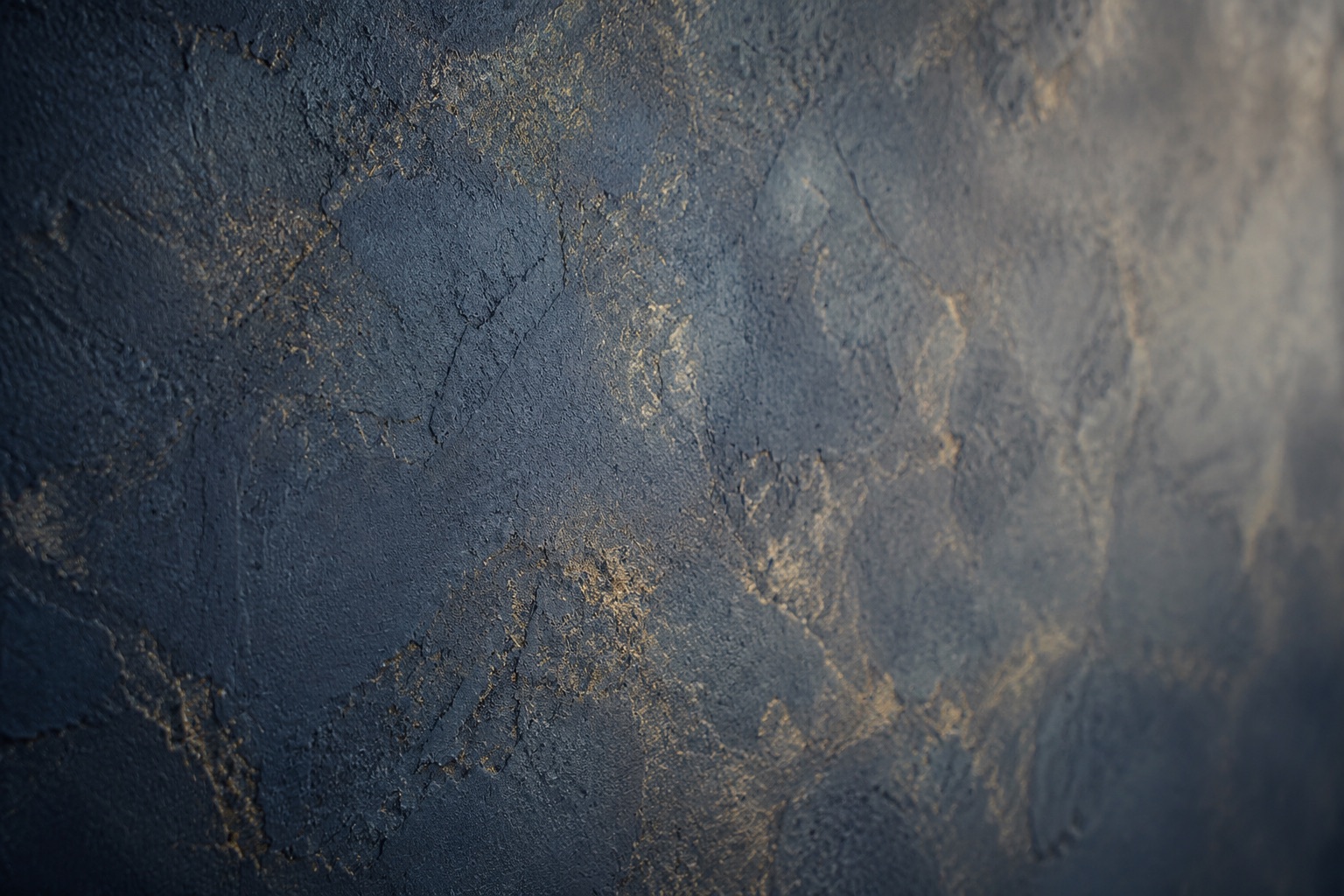
Limewash & Roman Clay Finishes
Two breathable, matte mineral finishes for Southwest Florida walls. Limewash gives you soft, cloudy movement. Roman clay gives you a suede-like depth you want to touch. Hand-applied by a 42-year master and troweled to the standard designers specify when they will not risk anything less.
Mineral finishes are unforgiving. The wall under them decides whether they last.
Limewash and Roman clay are mineral finishes, not paint. They live or die on the substrate underneath, the carry of each coat, and the pace of the trowel. Rushed prep telegraphs every flat spot and patch line straight through the final coat. The wrong primer kills the bond. And on the coast, a wall that cannot breathe traps humidity behind it, which is exactly where a true breathable mineral finish earns its keep: it releases moisture instead of blistering over it. Roman clay reads suede-soft and even. Limewash reads cloudy and alive, with depth that shifts as the light crosses the room through the day. Neither look survives a crew that treats it like rolled-on color. We treat the wall as the work. Line it, skim it, prime it, then build the finish in disciplined coats so the movement looks intentional rather than accidental.
What a limewash or Roman clay finish includes
- Substrate assessment: existing paint, sheen, alkalinity, moisture, and bond tested before a finish is recommended
- Surface prep and repair: skim-coat, sand, patch, and de-gloss so the finished coat reads even
- Mineral-bonding primer matched to the finish. Limewash and Roman clay each take a different base.
- Limewash application: multiple thin, breathable lime coats brushed in a cross-hatch for soft, cloudy movement
- Roman clay application: troweled mineral-clay coats burnished to a tight, suede-like matte depth
- Custom tinting and on-wall sample boards approved before full application, so there are no surprises at scale
- Edge, corner, and trim discipline: clean terminations, consistent movement around openings, no lap marks
- Optional breathable mineral sealer for baths, powder rooms, and high-touch walls in humid coastal homes
- Color and care guide so the finish can be touched up later without a visible patch
How we apply a mineral finish
- 01
Sample and approve
On-wall sample boards in your light, tinted to the exact movement and depth you want, approved before any full wall is touched.
- 02
Prep and prime
Walls skimmed, repaired, de-glossed, and sealed with the correct mineral-bonding primer. The substrate is the work.
- 03
Build the coats
Limewash brushed in thin breathable layers. Roman clay troweled and burnished. Pace and pressure stay consistent so the movement looks intentional.
- 04
Seal and protect
Where it earns its place, on baths, splash zones, and high-touch walls, a breathable mineral sealer goes on without killing the matte hand.
Why designers trust us with the finish
42 years of hand-applied finish work
We build the wall and finish it
Coastal humidity is our home turf
Limewash & Roman clay: common questions
What is the difference between limewash and Roman clay?
Limewash is a thin lime-based finish brushed on in layers. It gives a soft, cloudy, weathered movement that shifts with the light. Roman clay is a troweled mineral-clay finish that reads tighter and more even, with a suede-like matte depth. Limewash feels organic and atmospheric. Roman clay feels refined and velvety. Both are breathable and matte. The choice comes down to the mood you want in the room.
Are limewash and Roman clay good for humid Florida homes?
Yes. That is where they do their best work. Both are breathable mineral finishes, so they let moisture move through the wall instead of trapping it the way a sealed acrylic film can. The caveat is application. The wall has to be prepped, primed, and, in wet areas, sealed correctly, or coastal humidity will find any shortcut you took. Done right, a mineral finish is a coastal-Florida asset.
How much does a limewash or Roman clay finish cost?
Pricing is per square foot and depends on the condition of the existing walls, the number of coats, custom tinting, and whether a sealed system is needed for wet areas. These are hand-applied finishes, so the wall prep often drives the budget as much as the finish itself. We quote after seeing the walls and approving a sample, so the number reflects the real scope instead of a guess.
Can limewash or Roman clay go in a bathroom or powder room?
Yes, with the right system. For powder rooms and most bathroom walls, a breathable mineral sealer lets the finish handle splash and wipe-downs without losing its matte hand. For direct-wet zones like shower surrounds, we usually recommend a waterproof finish such as Tadelakt or microcement instead, and keep limewash or Roman clay on the surrounding walls.
Can you apply these over existing painted walls?
Usually yes, but not by going straight over the paint. The wall first gets de-glossed and primed with a mineral-bonding base so the finish actually adheres. Skipping that step is the most common reason a DIY mineral finish flakes. If the existing surface is in rough shape, we skim and repair it before any finish goes on, because every flaw underneath telegraphs through a matte coat.
Specifying a mineral finish? Let us sample it on your wall.
We prep a tinted sample board in your light and walk the space with you or your designer before a brush ever touches the full wall.