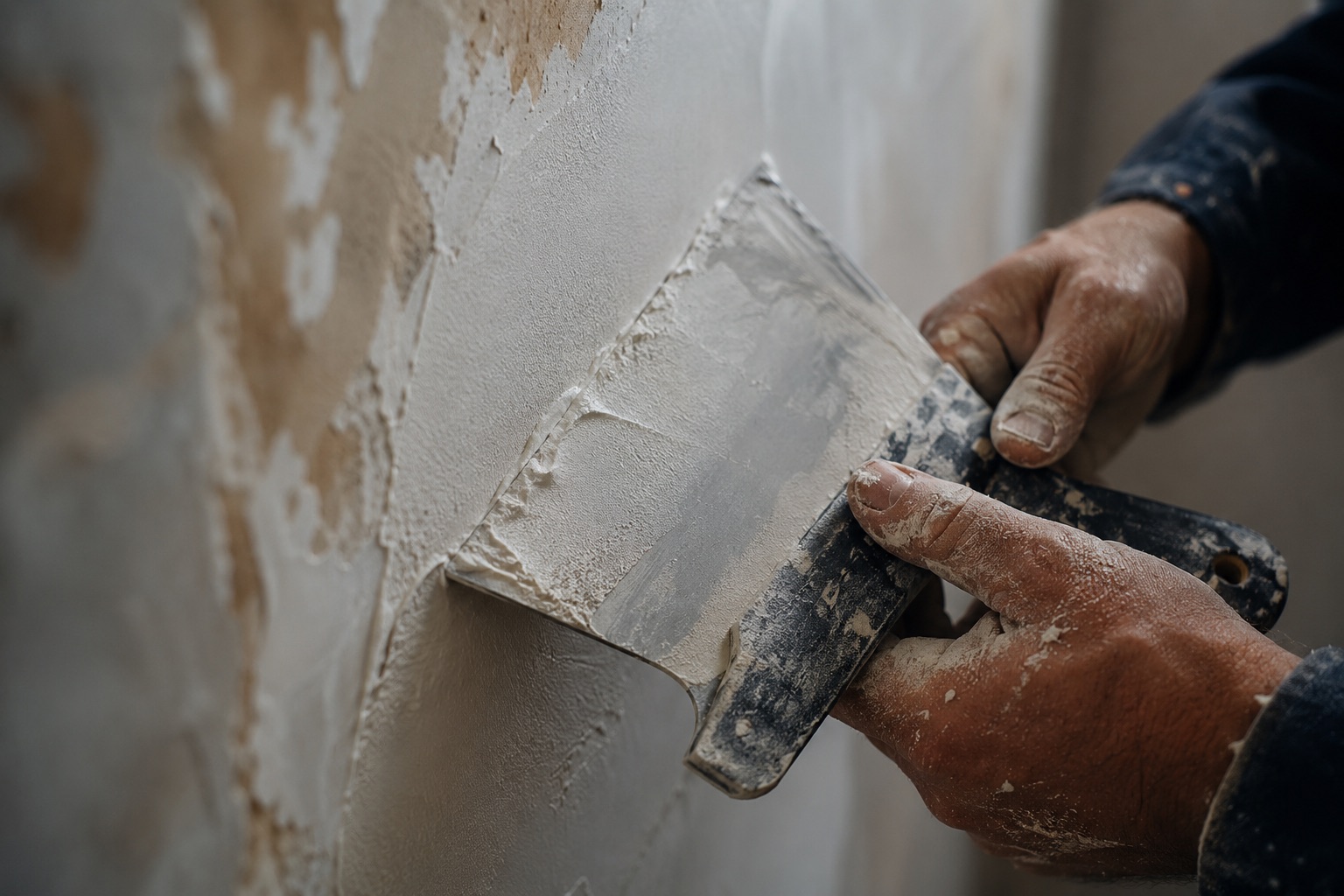
Wallpaper Removal & Wall Prep for a Substrate Worth Hanging On
A grasscloth or hand-painted panel is only as good as the wall behind it. We strip old paper without gouging the drywall, repair what the last installer left behind, and hand off a skim-coated, sized, lined surface that telegraphs nothing through the finish. We hold a CBC license, so the same crew fixes the wall, not just the paper.
The defect you see in the finished wall was poured into the prep
Open seams. Telegraphed joints. Raised paper edges, bubbles that show up a week after the install. Almost none of it is the material's fault. It is the wall. Strippable vinyl that got painted over instead of removed. Adhesive residue nobody washed off. A drywall face torn during the last removal and skimmed too thin to matter. Bonded paper that fused to unprimed gypsum because the original hanger skipped the sizing. Hang $200-a-yard silk or a de Gournay panel and the substrate has to be dead flat, sealed, and dimensionally honest, because the finish hides nothing. Price-shopper crews treat prep as the part you rush through to get to the fun part. We treat it as the job. Get the wall right and the install gets boring, which on a delicate material is the whole point.
What removal and prep covers
- Existing wallcovering assessed as strippable, peelable, or bonded, tested in a hidden corner before we commit to a removal method
- Dry-strip removal of strippable goods, lifted from the seam without scoring or tearing the drywall face
- Steam and solvent-gel removal of bonded paper and old paste-the-wall installs that fused to the substrate
- Adhesive residue washed down and neutralized, with no glassine ghost left to reactivate under the new paste
- Drywall and plaster repair: torn paper face, gouges, nail pops, popped seams, and prior bad patches re-floated
- Skim coat to a Level 5 finish where the new material wants a dead-flat plane: grasscloth, silk, high-sheen, raking light
- Lining paper (cross-lining) on rough, repaired, or porous walls so the finish reads as one continuous surface
- Primer, sizing, and pigmented seal coats matched to the material and the wall, the step the last installer skipped
- Moisture check on coastal exterior walls before any sealing, so we are not trapping damp behind the new goods
How we prep a wall
- 01
Test and identify
We test a hidden corner to confirm whether the existing covering is strippable, peelable, or bonded, and read the substrate underneath. The removal method follows the test, not a guess.
- 02
Strip and wash
Strippable goods come off dry from the seam; bonded paper gets steamed or gelled and lifted clean. Then every wall is washed to bare, neutral substrate — all paste residue gone.
- 03
Repair and skim
We re-float torn drywall face, gouges, and old patches, then skim-coat and sand flat wherever the new material will show every flaw under raking light.
- 04
Line, prime, and size
We cross-line where needed, then prime and size with the sealer that suits the finish material, so the new install bonds correctly and strips cleanly the next time around.
Why prep is the part to hire carefully for
We can fix the wall, not just the paper
We prep for what is going up next
42 years of removing other people's mistakes
Wallpaper removal and wall prep — common questions
Do I really need to remove old wallpaper, or can you hang over it?
In almost every case it has to come off. Hanging new material over old paper traps the weakest seam in the assembly behind your finish, and any moisture or adhesive failure underneath telegraphs straight through. On a high-end install we remove down to a sound, sealed substrate every time. The one exception is a single well-bonded liner left as a base on purpose, and only after testing.
What is the difference between strippable and bonded wallpaper removal?
Strippable and peelable goods are built to release from the wall, so they lift dry from the seam with little damage when done carefully. Bonded paper, usually older or installed without sizing, has fused to the drywall. It has to be steamed or treated with a solvent gel and scraped, which is slower and far more likely to tear an unprotected drywall face. We test a hidden area first so we know which one we are dealing with before we quote.
What is a skim coat, and when do my walls actually need one?
A skim coat is a thin layer of joint compound floated over the whole wall and sanded to a dead-flat Level 5 finish. You need it when the new material will reveal every imperfection: grasscloth, silk, high-sheen vinyl, or any wall hit by raking light from a window or sconce. On a sound wall under a heavily textured or forgiving paper, spot repair and a good primer may be enough.
What is lining paper and why would you use it?
Lining paper (cross-lining) is a plain liner hung horizontally under the finish material to give it a uniform, slightly absorbent base. We use it on repaired, porous, or uneven walls, and under premium natural-fiber goods, so the finish reads as one continuous surface instead of showing patches and substrate variation underneath. It also makes the eventual removal of the expensive material far cleaner.
Why does coastal Florida humidity matter for wall prep?
Southwest Florida walls hold and move moisture in ways inland walls do not. Damp trapped behind a sealed wallcovering is what causes mildew, lifting seams, and adhesive failure months later. Before we prime or size, we check the exterior-facing walls for moisture and fix the source, then use primers and sealers rated for the humidity. That step is the difference between an install that lasts and one that bubbles by the next rainy season.
Related Services
Hanging something delicate? Let us see the wall first.
Send us the material spec and the room, or have us walk the site. We will tell you straight what the substrate needs before a single drop goes up.