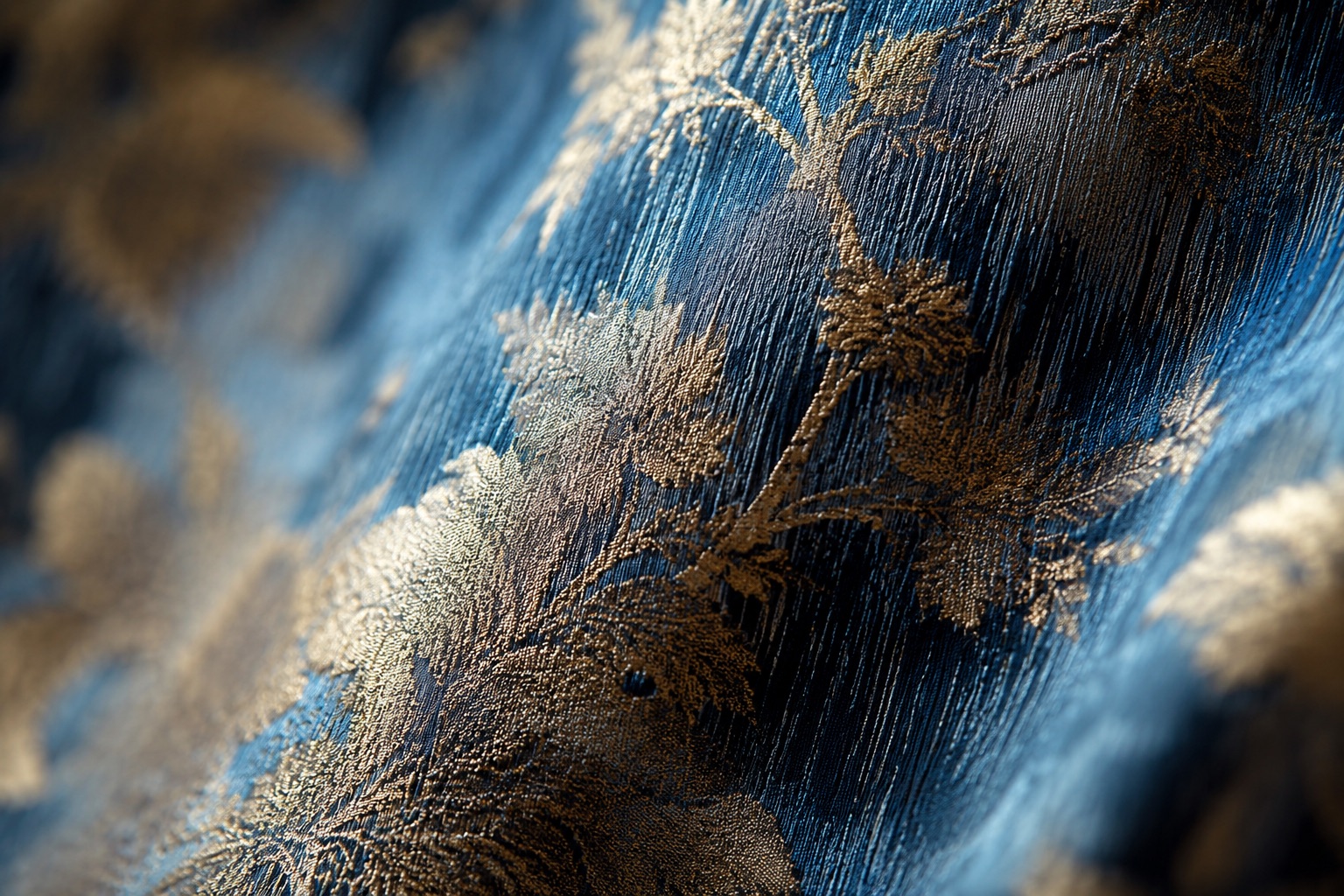
Silk & Textile Wallcovering Installation
Silk, linen, and suede wallcoverings are unforgiving. One thumbprint of paste on the face is permanent. We install delicate textiles the way the mills intend: paste-the-wall or back-paste only, clean-hands discipline, and seams matched panel to panel. Florida CBC-licensed (CBC 1258403), 42 years on the wall.
On silk, there is no second chance. The face cannot touch paste, water, or a wet rag
Painted wallpaper forgives. Silk and textile wallcoverings do not. The face is the finished good. Paste that wicks through a seam, a damp sponge wiped across the surface, or oil off a bare hand leaves a mark no cleaning removes, and the panel is scrapped. These are unbacked or paper-backed natural fibers, and every roll carries a slight variation in shade and sheen, so sequencing and reversing panels matters as much as hanging them straight. The material rarely fails. The install does. That is where a specialist earns back the cost of the goods. We handle de Gournay, Fromental, and Gracie panels, and the silk, linen, and suede lines beneath them, as one-of-one: cotton gloves, a clean cutting table, and paste that never reaches the face.
What a silk and textile install includes
- Substrate assessment and a full lining-paper (blank-stock) layer so the textile hangs on a uniform, sealed surface, never raw drywall or old adhesive
- Clean-hands protocol: cotton gloves, sealed work surface, and back-paste or paste-the-wall method so adhesive never contacts the face
- Roll sequencing and panel reversing to manage natural shade and sheen variation across silk, linen, and grass-backed textiles
- Dry-hang layout: panels positioned and balanced to the room before a drop of paste is mixed, with seams planned off focal sightlines
- Precision butt seams with no overlap. We avoid double-cutting on delicate faces wherever the goods allow, to protect the lining beneath
- Pattern and texture match across the run, including repeat alignment on printed silks and railroaded textile panels
- Outlet, switch, and trim cut-ins done with fresh blades and zero face contamination
- Humidity and acclimation control: material conditioned to the room before install, which matters in coastal Florida
- Lines we install and are fluent in: de Gournay, Fromental, Gracie, Phillip Jeffries, Maya Romanoff, Scalamandré, and Pierre Frey textiles
How we hang delicate textile
- 01
Surface prep and lining
Walls are skimmed, sealed, and lined with blank stock so the textile sits on a clean, uniform substrate. Most install failures trace back to a skipped lining step.
- 02
Dry layout and sequencing
Panels are unrolled, inspected, and sequenced for shade and sheen, then dry-positioned to the room. Seams are planned off sightlines and corners balanced before any paste.
- 03
Clean-hands install
Gloves on, table sealed, paste applied to the wall or panel back only. Each drop is set, seams butted tight, and the face is kept untouched by adhesive or water.
- 04
Cut-ins and final walk
Outlets, trim, and corners are cut with fresh blades, then we walk the room in raking light with you to confirm seams disappear and sheen runs consistent.
Why designers trust us with the expensive goods
The risk is the install, and that's our discipline
Fluent in the luxury textile lines
Coastal-Florida humidity, handled
Silk & textile wallcovering — common questions
How much does silk wallcovering installation cost?
Installation typically runs by the panel or by the roll rather than a flat per-square-foot rate, because delicate textiles take longer and carry more risk than printed paper. The bigger cost is usually the material itself. Lines like de Gournay or Fromental are priced per panel and per yard. We quote install separately from goods so you can see exactly what the labor and prep cost, and we always price in the lining layer that protects the investment.
Can you install de Gournay, Fromental, and Gracie panels?
Yes. These hand-painted and embroidered silk panels are among the lines we install and are fluent in. They arrive as numbered, room-specific panels, not a repeating roll, so they require a panelized layout, careful sequencing, and clean-hands handling. We confirm the panel map against your walls before a single drop is pasted.
Why can't paste touch the face of silk wallpaper?
Because the face is the finished surface, and natural silk fibers absorb anything they contact. Paste, water, or oil from a bare hand wicks into the weave and leaves a permanent stain that no cleaning removes, and the panel has to be scrapped. We use back-paste or paste-the-wall methods and cotton gloves so adhesive never reaches the silk.
Do I need lining paper under textile wallcovering?
For silk, linen, and suede, yes. A blank-stock lining layer is standard practice, not an upsell. Lining gives the textile a uniform, sealed surface to grip, hides minor wall imperfections that would telegraph through a thin face, and blocks alkali and moisture migrating from the wall. Skipping it is the most common reason a delicate install fails early.
Will textile wallcovering hold up in humid Florida coastal homes?
It will, when it's installed for the climate. Humidity swings make fibers expand and contract, which stresses seams over time. We acclimate the material to the room before hanging, control conditions during the cure, and prep the wall to block moisture migration. Those are the steps that keep coastal-Florida seams tight through the seasons.
Related Services
Specifying silk or textile? Let's protect the goods.
Send us the line, the panel map, and the room. We'll walk the prep, the sequencing, and the seam plan before anything ships.