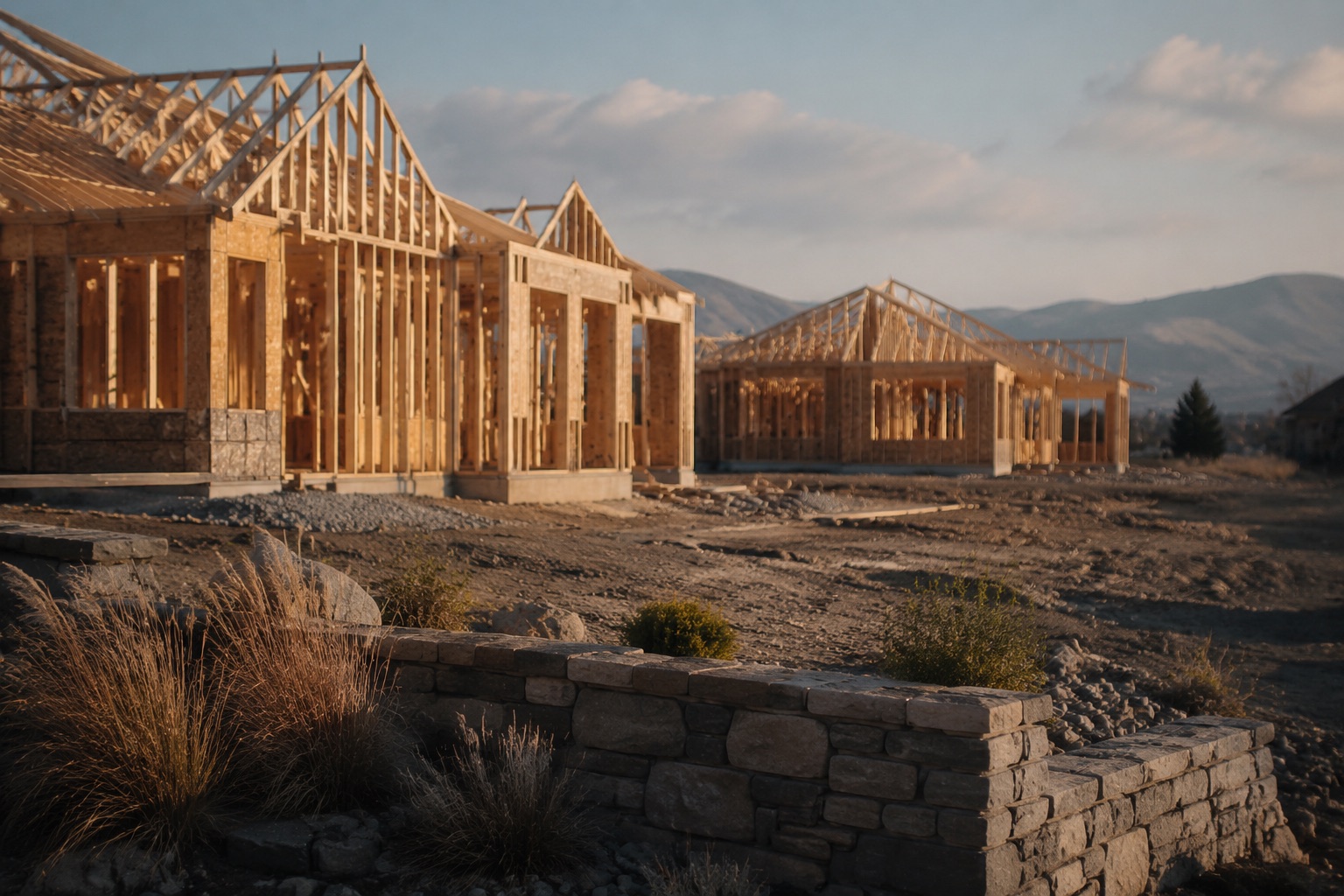
Residential Subdivision Development — From Raw Land to First Model Home
Sitework, infrastructure, and lot delivery for single-family subdivisions. CBC-licensed GC with documented subdivision experience including 27-lot, 58-acre Harrington Hall development.
Subdivision development is half permitting, half coordination, and almost no vertical construction
Raw-land subdivision development is its own discipline. Before a single foundation goes in, the developer has to navigate plat approvals, environmental review, utility extensions, stormwater design, road construction to county or municipal spec, and a half-dozen sub-permits. The vertical construction — the model home, then the production homes — is the easy part. We’ve managed subdivision development including Harrington Hall in Waxhaw, NC — 27 lots on 58 acres where we did all the sitework and built the first model home. The Harrington Hall II in Mineral Springs NC was a 27-lot development at $1.4M. Development infrastructure work is part of the bio.
Subdivision development scope
- Pre-development feasibility and budget
- Engineering and platting coordination with civil engineer
- Permitting through county and utility authorities
- Land clearing and grading
- Road construction to county or municipal spec
- Utility extensions: water, sewer (or septic where applicable), electrical, gas
- Stormwater management: ponds, swales, drainage structures
- Lot preparation: pads, driveway aprons, individual utility laterals
- Model-home construction to anchor sales
Our subdivision development process
- 01
Feasibility and pre-development
Site walk, soils, environmental constraints, utility availability — go/no-go before commitments.
- 02
Engineering and permits
Civil engineering coordination, platting, plan approvals, sub-permits across agencies.
- 03
Infrastructure construction
Clearing, grading, roads, utilities, stormwater — built to county acceptance.
- 04
Lot delivery + model home
Lots prepared for vertical construction; model home built to anchor sales for the development.
Why developers hire us
Documented subdivision experience
Multi-agency permit coordination
CBC 1258403 — Florida CBC
Subdivision development — common questions
Do you do feasibility and entitlements?
Feasibility yes — sitework, infrastructure cost, schedule. Entitlements (zoning approvals, conditional use, variance) are typically handled by a land-use attorney and civil engineer; we coordinate with them.
How long does subdivision development take?
12-36 months from raw land to first lot ready for vertical construction. Heavy variance based on agency review cycles and utility extension timelines.
Can you build the production homes too, after the lots are ready?
Yes — and Harrington Hall is a working example (we did sitework plus the first model home). Production-home construction can be done by us or by the developer’s preferred builder.
What about wetlands or environmental constraints?
Identified during feasibility through soils testing and environmental review. Mitigation strategy (where applicable) coordinated with environmental consultants before site disturbance.
Do you work with a public/private partnership structure?
Yes — we’ve worked with developers on both fully-private and PPP-style infrastructure projects. The contracting structure changes; the construction discipline doesn’t.
Have land in mind? Let’s walk it.
Feasibility walk, budget, and a permit-realistic schedule.