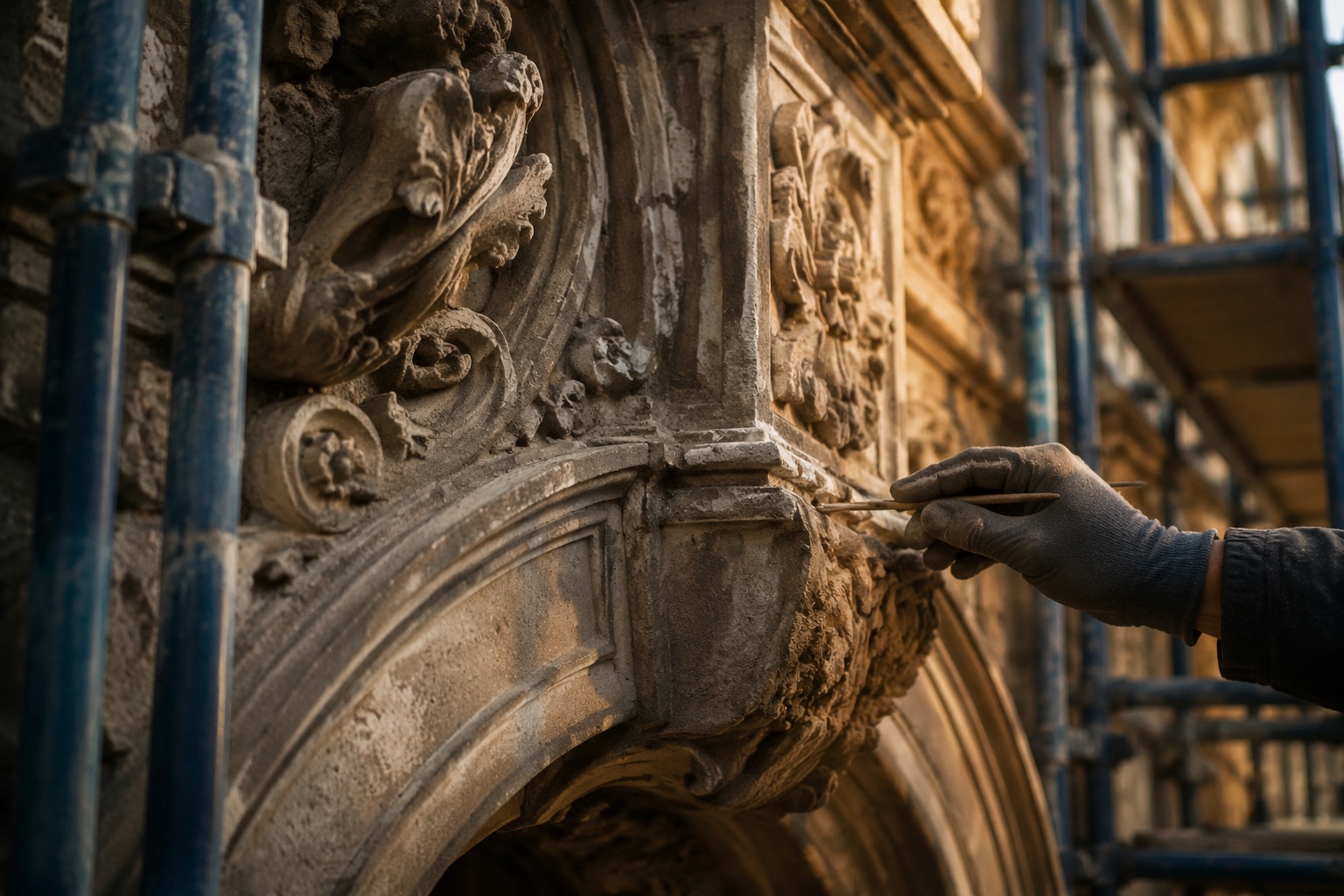
Historic Building Restoration That Respects the Original Building
Sensitive restoration of historic commercial and residential properties. CBC-licensed GC with documented historic projects including Southernmost House Key West and GE Historic Building Galveston.
Historic restoration is what GCs miss when they treat an old building like a new one
Historic buildings have their own rules: original material salvage, like-for-like replacement, board-approved finishes, and inspections by a historic preservation authority on top of the standard building department. GCs who normally do new construction underestimate the documentation, the lead times on salvaged-spec materials, and the review boards. We’ve restored Southernmost House in Key West (historic renovation) and the GE Historic Building in Galveston, Texas ($1.45M). Steve Keup, Area VP for the property group that owns Southernmost House, wrote that Steve "communicated on a timely basis, stayed within his bid price, [and] noted several items that needed attention outside the bid process." Historic work rewards a contractor who notices things.
Historic restoration scope
- Existing-conditions documentation with photo and measured drawings
- Historic finish analysis: paint colors, materials, original construction methods
- Coordination with historic preservation authority for approvals
- Selective demolition that preserves original materials and details
- Like-for-like replacement: trim, millwork, plaster, flooring
- Structural reinforcement that doesn’t alter visible historic character
- Modern MEP upgrades hidden in historically appropriate ways
- Period-appropriate paint, finish, and hardware selection
- Permitting through building department + historic review board
How we run a historic restoration
- 01
Documentation walk
Photo and measured documentation of original conditions before any work starts.
- 02
Board approvals
Plans submitted to local historic preservation board; approvals secured before permit.
- 03
Sensitive demolition
Selective demo with original materials catalogued for re-use or like-for-like replacement.
- 04
Restoration build-back
Period-appropriate restoration with modern systems hidden behind historic finishes.
- 05
Final preservation sign-off
Final inspections by building department and historic board; preservation documentation closeout.
Why historic owners hire us
Documented historic project experience
Owner-reference quote on attention to detail
CBC 1258403 — 42+ years principal experience
Historic restoration — common questions
Do you handle historic preservation board approvals?
We coordinate with the architect or preservation consultant who prepares the submission, attend board meetings as needed, and execute to the approved plans. We don’t prepare the historic submission itself — that’s usually a preservation architect or consultant.
Can you find replacement materials that match the original?
Often yes — through specialty millwork shops, salvage yards, and architectural reproduction vendors. Lead times can be long; we plan for that in the schedule.
What if my building isn’t officially registered but is historically significant?
Then you have more flexibility but the same goal — keep the building’s character. We approach it the same way without the board review constraints.
How do you handle hidden conditions in old buildings?
Old buildings hide more than new ones. We budget contingency for hidden conditions explicitly, document everything we uncover, and price changes transparently as we find them.
Do you do hurricane upgrades on historic buildings?
Yes, where preservation board guidelines allow. Modern wind-resistance can usually be added without visibly altering character — concealed strapping, period-appropriate impact glazing options, and reinforcement.
Historic property in your portfolio? Let’s walk it.
On-site visit, photo documentation, and a preservation-aware proposal.