Home Addition Contractor — Add the Square Footage, Match the House
Single-story and second-story additions, primary suites, and rear extensions for SWFL homes. CBC-licensed GC handling structural, MEP, and finish tie-ins seamlessly.
Additions are judged on the seam — where new meets old has to disappear
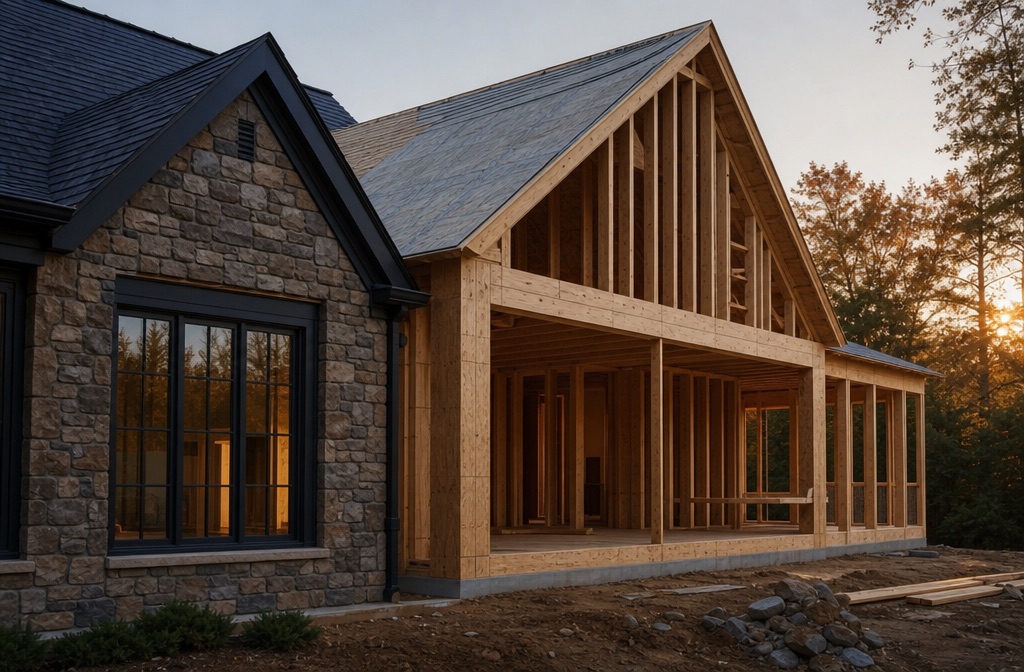
A well-built addition reads as part of the original house. A poorly-built one has a roofline that doesn’t quite line up, drywall that telegraphs the seam, and a floor that steps a half-inch where the addition meets the existing slab. The structural and finish tie-in between new and existing is where most additions go wrong. We approach additions as integration projects — match existing trim profiles, blend roof planes, level floor systems, repaint enough of the existing house to make the transition invisible. The bathrooms and electrical inside the addition are easy; the seam is the craft.
Home addition scope
- Architectural and structural drawings coordination
- Foundation: slab or stem-wall to match existing
- Framing tie-in to existing house with proper structural connection
- Roof addition: tie-in to existing rafter system, shingle match
- Exterior envelope: siding/stucco match, paint, windows, doors
- Interior MEP rough-in to existing house panels and systems
- Drywall, paint, trim, flooring — matched to existing rooms
- HVAC modifications: extend existing system or add a zone/unit
- Permits, structural engineering coordination, and inspections
How we build an addition
- 01
Walk and feasibility
Walk the property, check setbacks, lot coverage, and HOA constraints, talk scope.
- 02
Design and permit
Architectural design (yours or our recommendation), structural engineering, permit submission.
- 03
Foundation through dry-in
Foundation, framing, roof, exterior envelope — dry-in before opening the existing house.
- 04
Tie-in and finish
Cut into the existing house, integrate MEP, drywall and paint to match, repaint affected areas.
Why owners pick us for additions
CBC 1258403 — Florida CBC
Hospitality finish discipline transfers
Residential new-build experience
Home additions — common questions
Can I add a second story to my existing house?
Sometimes. The existing foundation and wall framing have to support the additional load — a structural engineer evaluates first. If the existing structure can’t support it, foundation reinforcement is part of the project.
How long does a typical addition take?
4-8 months from permit to final inspection for a single-story addition of 400-800 sq ft. Second-story or larger additions run longer because of the structural and weather-protection complexity.
Will my taxes go up?
Almost certainly — additional square footage triggers a reassessment. Talk to your county property appraiser for specifics. We can’t advise on tax implications.
Do I need an architect?
For most additions, yes — at minimum for the design and engineering. Some simple, like-for-like additions (extending a bedroom) can be done with a residential designer instead of a registered architect. We’ll recommend the right level.
What about HOA approval?
Most SWFL HOAs require architectural review board approval for additions. We coordinate with the architect on the submission and pause construction until approval is in hand.
Can we stay in the house during the addition?
Usually yes — the addition is built and dried-in before the existing house is opened up to it. Brief disruptions when we cut into the existing wall, but rarely a reason to move out.
Adding on to your home? Let’s walk the property.
On-site consultation and a feasibility-aware conceptual budget within two weeks.